
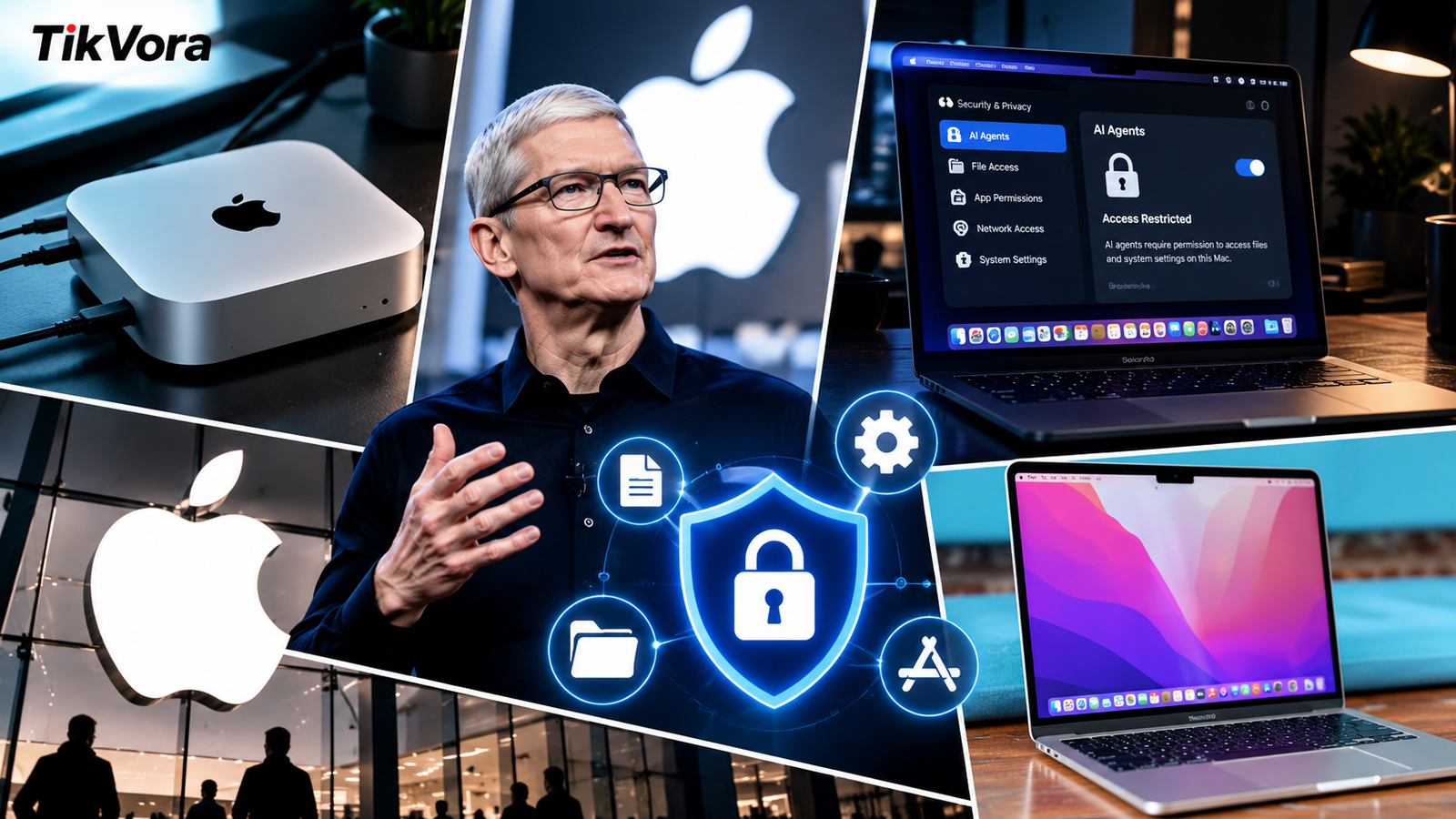
Apple Mac AI agent security has announced plans to tighten privacy controls on macOS after warning that increasingly capable AI agents could misuse broad access to personal information stored on a Mac. The move focuses on the system’s “Full Disk Access” permission, which can allow an app to read highly sensitive data, including files, email, messages and browsing history.
Apple Mac AI agent security A New Warning From Apple
Apple Mac AI agent security In a developer update published on October 2, Apple said it will introduce additional controls for apps seeking Full Disk Access on macOS. The company’s central message is simple: users should have to make a clear, deliberate choice before giving any app such extensive authority over their computers.
Apple Mac AI agent security Full Disk Access was originally designed for legitimate tools that need to scan or back up a Mac, such as backup software. However, Apple says some developers have used this powerful permission in ways that may expose users’ data without sufficient awareness or understanding.
Apple Mac AI agent security The warning arrives as AI agents become more common. Unlike a standard chatbot that only responds to a question, an AI agent may be designed to perform tasks, search files, organise documents, draft replies, manage workflows or interact with apps. That usefulness can become a privacy problem if the software is given unchecked access to a person’s entire digital life.
What Full Disk Access Means
Apple Mac AI agent security On a Mac, Full Disk Access is not an ordinary permission. It can potentially open the door to a large part of the user’s stored information, including personal files, Mail data, Messages content and browsing-related data. Apple describes it as an extraordinary level of access because it can bypass many of the privacy protections that normally limit what an app can see.
For a backup app, this access can be necessary. A backup service cannot create a complete copy of a computer if the operating system blocks it from seeing important folders or protected databases. The issue arises when a different kind of app—especially one that continuously reads, analyses and acts on data—asks for the same privilege.Apple Mac AI agent security
Apple Mac AI agent security An AI assistant with Full Disk Access could, in theory, find useful context more easily. It might locate an invoice, identify a document, summarise a project folder or surface a message relevant to a task. But the same capability could also expose private conversations, health records, financial documents, work material or confidential client information.Apple Mac AI agent security
Why AI Agents Change the Risk
Apple Mac AI agent security specifically linked the coming changes to the rise of more autonomous AI agents. The company said the risks associated with broad disk access will increase substantially as these systems become more capable and autonomous.
Apple Mac AI agent security That distinction matters. Traditional software usually follows a narrow and predictable function: a photo editor edits photos, a backup app copies files, and a media player plays media. AI agents are often built to interpret broad instructions, decide which information may be relevant, and take a sequence of actions to complete a task.
For example, a user might ask an AI agent to prepare for a meeting. To fulfil that request, the agent could search calendars, emails, documents, notes and messages. If permissions are poorly designed, the software may gain access to far more material than is necessary for a single job.
AApple Mac AI agent security pple’s concern is not that every AI agent is malicious. Rather, it is that highly capable software with persistent, system-wide access can create new opportunities for accidental exposure, over-collection of data or abuse by bad actors.
Explicit Consent Becomes Central
Apple Mac AI agent security has not yet detailed the exact technical design of the new controls. It has, however, said that users who genuinely want to grant an application Full Disk Access will be able to do so only through “very explicit user action.”
This suggests that macOS may add more friction before an app gains access to the most sensitive areas of the device. The aim is likely to prevent people from casually clicking through a permissions screen without recognising the consequence.Apple Mac AI agent security
The policy reflects a broader principle in privacy design: access should match the task. An app that needs access to one folder should not automatically receive access to every file, account and message on a computer. A system that makes a user stop, read and consciously approve a powerful permission can reduce the chance of accidental consent.
Apple said it wants users to understand the risks before they decide whether to share that level of access. In practice, that may mean clearer warnings, more visible permission prompts, or separate confirmation steps that cannot be buried inside a long installation process.Apple Mac AI agent security
The Privacy Stakes Are High
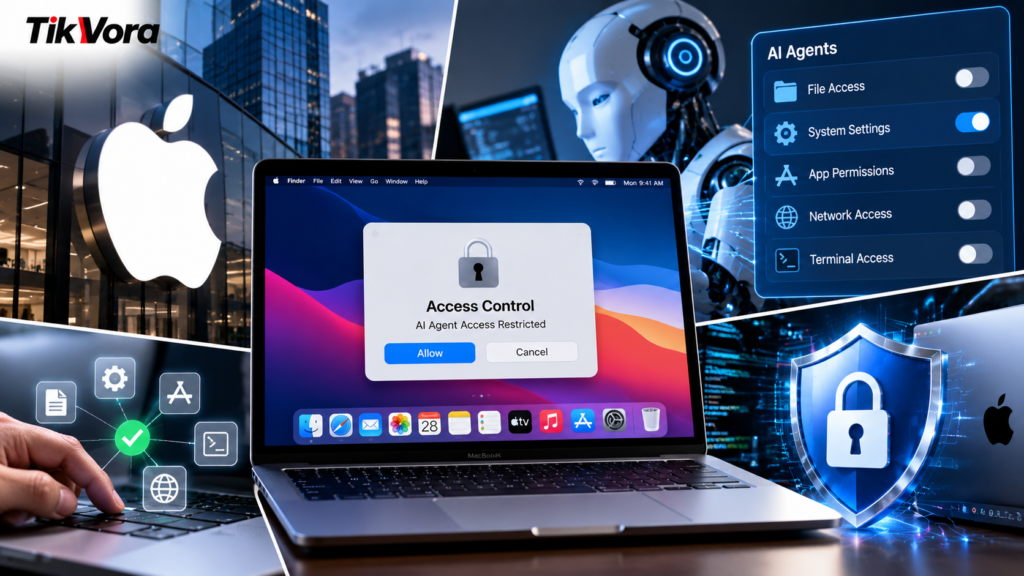
The data stored on a modern laptop is deeply personal. A Mac may contain years of documents, family photographs, tax records, travel details, saved passwords, work files, private chats and medical correspondence. Granting an app unrestricted access is therefore different from allowing it to use a camera or send notifications.Apple Mac AI agent security
Apple also noted that communication apps can create privacy risks not only for the Mac owner but also for the people they communicate with. If an app can read messages or emails, it may collect information written by friends, family members, colleagues, customers or business partners who never agreed to have their conversations processed by a third-party AI system.
This creates an important issue for workplaces in India as well. Companies increasingly use AI tools for writing, customer support, coding, reporting and internal knowledge search. If employees install tools with broad permissions on personal or office Macs, confidential business material may be exposed outside approved company systems.
For professionals handling client data—such as lawyers, doctors, accountants, journalists and consultants—the implications are especially serious. Convenience cannot become an excuse for giving unverified software unrestricted access to sensitive records.Apple Mac AI agent security
A Response to Growing Concerns
Apple’s announcement follows wider public concern about AI software that can read, summarise or act on information across a computer. Reporting around new AI agent products has drawn attention to the possibility that such tools may access private messages or personal files when granted sweeping permissions.Apple Mac AI agent security
The issue is not limited to Apple devices. Every major operating system company is trying to balance two competing demands: people want AI assistants that are genuinely useful, but they also expect their private data to remain protected.
The difference is that a desktop operating system contains a particularly rich collection of information. A web-based chatbot normally sees only what a user uploads or types. A local agent on a laptop may be able to see documents, apps, downloads, browser activity and communication histories if the user approves broad permissions.
That makes operating-system safeguards more important. The permission system becomes the line between a helpful assistant and a tool that has visibility into almost everything a person does digitally.
What Mac Users Should Do
Apple’s future controls are not yet fully described, but Mac users do not need to wait for a software update to improve their security habits. The safest approach is to treat Full Disk Access as an exceptional permission, not a default setting.
- Do not grant Full Disk Access merely because an app says it will work “better” with it.
- Check whether an AI tool can complete its task using access to a specific folder rather than the entire Mac.
- Download software only from developers you recognise and trust.
- Review the app’s privacy policy, especially whether it sends files or personal information to external servers.
- Revisit macOS privacy permissions periodically and remove access from apps you no longer use.
- Keep macOS and installed applications updated, because updates often include security and privacy improvements.
- Be particularly cautious before giving AI tools access to Mail, Messages, browser data, cloud-storage folders or work documents.
Users can review permissions through macOS privacy settings. If an app has access that no longer makes sense, removing it is a sensible precaution. An AI app that cannot function without sweeping access should also explain clearly why it needs that access and what it does with the information.
Impact on Developers
For software developers, Apple’s shift may increase friction in the installation and onboarding process. Developers building legitimate backup, security or accessibility products may need to more clearly explain why their app requires Full Disk Access and guide users through an enhanced consent process.
However, the policy could also help trustworthy developers. When users see stronger platform-level warnings, applications that ask for broad permissions without a clear reason may face greater scrutiny. Developers that practise data minimisation—asking only for the access they truly need—could gain an advantage.
AI companies may also need to redesign their products around narrower permissions. Instead of scanning every file continuously, an agent could ask a user to select a folder, approve a specific action or confirm access each time it handles especially sensitive data. Such limits may make a product slightly less seamless, but they can make it far safer.
The Bigger Technology Shift
Apple’s move shows that the AI debate is moving beyond chatbot answers and image generation. The next stage involves systems that can take action on behalf of users across apps and devices. These agents may save time, but they also make permission design, transparency and accountability far more important.
A useful AI assistant should not require users to surrender control over their entire computer. It should make clear what data it wants, why it wants it, where the data goes and how the user can revoke access later.
Apple’s planned macOS changes are therefore more than a technical update. They are a statement that autonomy in AI must be matched by stronger human control. By requiring more deliberate consent for Full Disk Access, Apple is trying to ensure that convenience does not quietly override privacy on the Mac
Stay connected with the latest Indian News, World News, Breaking News, Latest Updates, Political News, Business & Stock Market, Sports, Technology & Digital, Entertainment, and Trending News with SACHKI KHABAR. Get fast, clear, and reliable updates on what is happening across India and around the world. Visit SACHKI KHABAR for the latest stories and important developments.
TIKVORA — Your trusted source for AI News, AI Tools, Technology, Startups, Innovation, Machine Learning, Generative AI, and Digital Trends. Fast, clear, and reliable updates on the technologies shaping the future.