Google Ads new advertiser tools: Introduction: Advertising Enters a More Automated Era
Google Ads new advertiser tools: is moving into a new phase in which artificial intelligence, first-party data, creative automation and improved measurement play a much larger role. For advertisers in India, these changes are especially important because the digital advertising market is becoming more competitive across e-commerce, education, finance, travel, local services and direct-to-consumer brands.
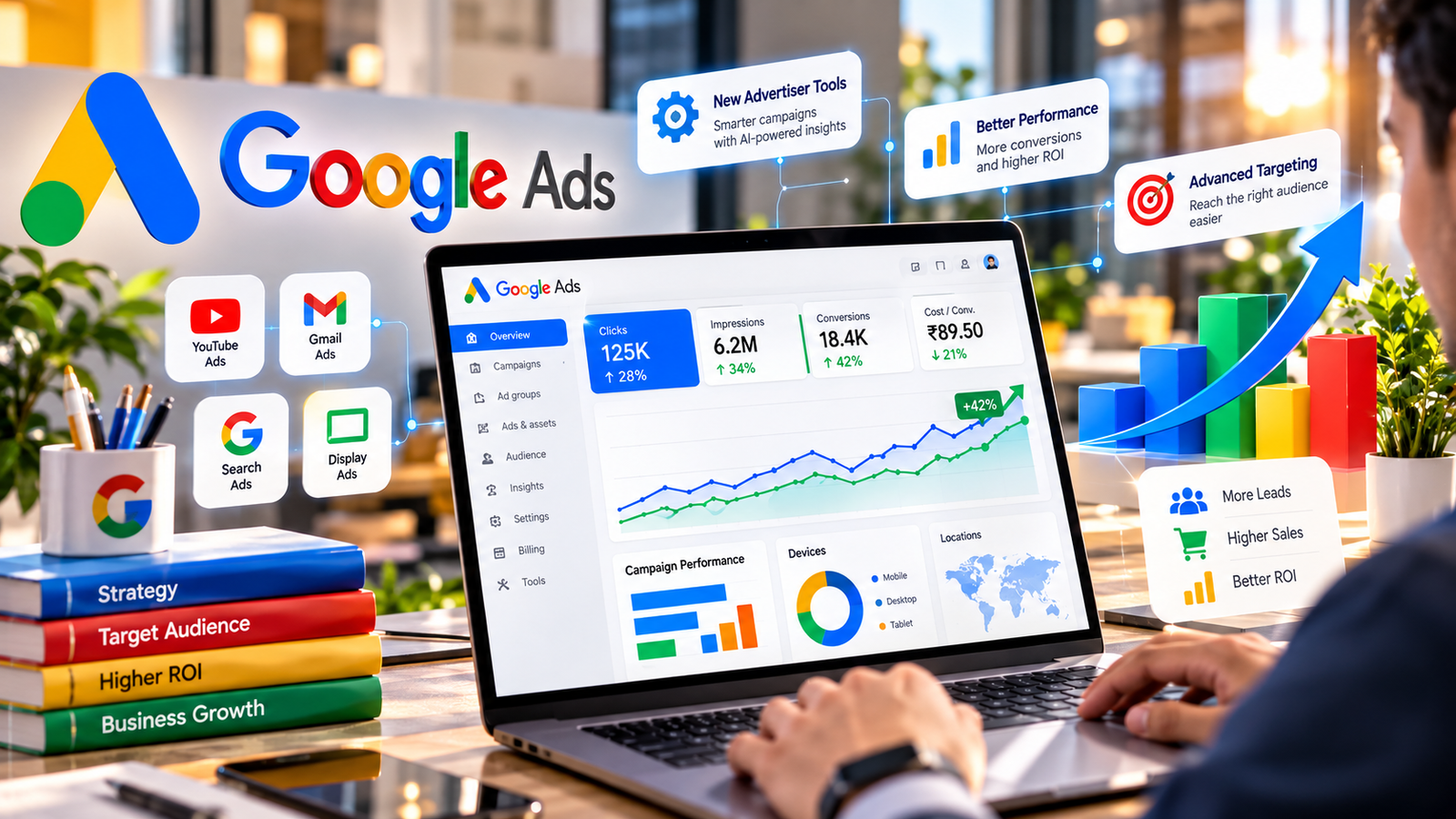
Google Ads new advertiser tools: Recent Google Ads developments focus on helping advertisers create campaigns faster, understand performance more clearly and reach customers across Search, YouTube, Shopping, Discover and other Google platforms. Google has also introduced additional controls so marketers can guide automated campaigns instead of relying entirely on the platform’s recommendations.
The latest updates include AI-powered creative tools, better data connections, new campaign controls, competitive benchmarks and improvements to Performance Max. Together, these features are designed to make advertising more efficient while giving businesses greater visibility into how their budgets are being used.
AI-Powered Creative Tools for Advertisers
One of the biggest areas of development is creative production. Google is expanding AI tools that help advertisers create and edit image and video assets without requiring advanced design skills.
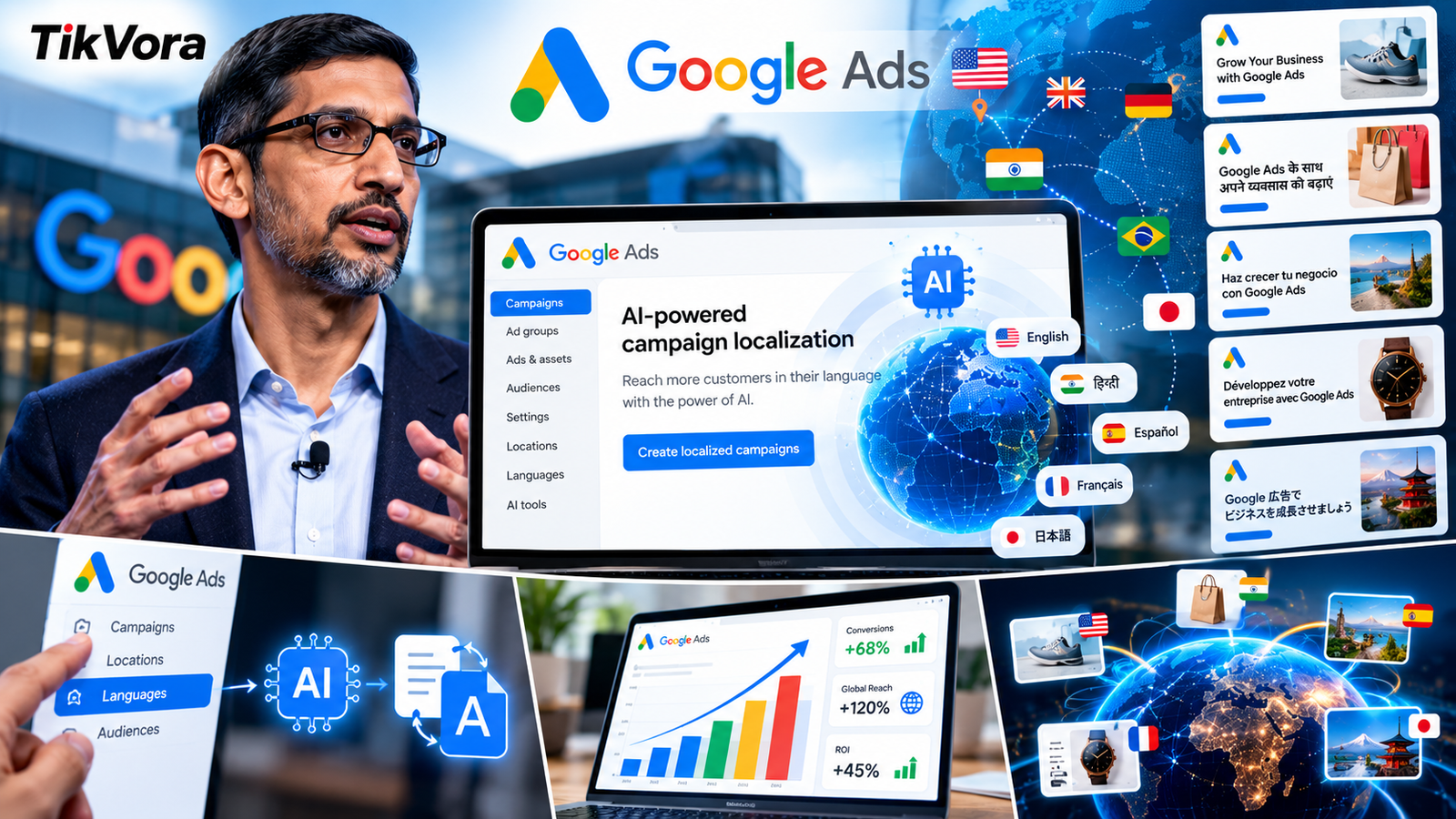
Google Ads new advertiser tools: Advertisers can now use AI-powered image editing in more campaign types, including Search, Demand Gen, App and Display campaigns. These features can help users resize images, extend backgrounds, remove or add objects and prepare creative assets for different placements. Google has also expanded asset-generation support to additional languages, making the tools more useful for international advertisers and multilingual markets.
For Indian businesses, this could be useful when creating different versions of an advertisement for Hindi, English, Marathi, Tamil, Bengali or other regional audiences. A clothing company, for example, may use one product image and create multiple formats for mobile Search, YouTube Shorts and Display placements.
Google Ads new advertiser tools: Google is also developing tools that can create branded video content more quickly. The company’s latest announcements mention Omni in Google Ads Asset Studio, which is designed to help advertisers turn brand assets and creative briefs into campaign-ready videos. This may reduce the time and cost involved in producing short-form advertising content.
However, advertisers should still review AI-generated content carefully. Product claims, prices, spelling, logos and cultural references must be checked before an advertisement goes live.
More Control Over AI-Powered Campaigns
Google Ads new advertiser tools: Automation is now central to Google Ads, particularly in Performance Max, Demand Gen and other AI-supported campaign types. While automation can help identify customers and adjust bids, advertisers have often asked for more control over messaging, creative direction and audience strategy.
Google has responded by introducing additional controls for AI-powered campaigns. Advertisers can provide brand guidelines, including colours, fonts, messaging preferences and example images. These instructions can help Google’s systems generate assets that are more consistent with a company’s identity.
New control features are also appearing in areas such as negative keywords, search themes, device targeting and demographic targeting. Recent updates indicate that advertisers can apply up to 10,000 negative keywords at the campaign level, while search themes have expanded to 50 per asset group.
These controls are valuable for businesses that want to avoid irrelevant traffic. For instance, a premium furniture brand may exclude searches containing words such as “free,” “repair,” “used” or “second-hand.” This can help reduce wasted clicks, although performance should be monitored because excessive exclusions may limit reach.
First-Party Data and Improved Measurement
Google Ads new advertiser tools: Privacy changes and the decline of third-party tracking have made first-party data more important. First-party data includes information collected directly from customers, such as website purchases, lead submissions, newsletter registrations and app activity.
Google is introducing updated Data Manager integrations that allow advertisers to connect and activate first-party data across Google tools. Google has also announced integrations involving Google Analytics and Display & Video 360, helping marketers manage data across different platforms.
Google Ads new advertiser tools: Better data connections can improve audience creation, conversion measurement and campaign optimisation. A travel company could use customer booking data to distinguish between people who only visited a destination page and those who actually completed a reservation. An education company could measure not only form submissions but also qualified admissions.
Google has also highlighted new measurement capabilities, including a Data Strength Uplift metric and Meridian GeoX for evaluating the real-world effect of marketing investments. These tools are intended to help businesses understand whether advertising is contributing to genuine growth rather than simply generating clicks or impressions.
Google Ads new advertiser tools: Advertisers in India should pay close attention to consent, data security and local privacy requirements when collecting and uploading customer information.
New Reporting and Competitive Insights
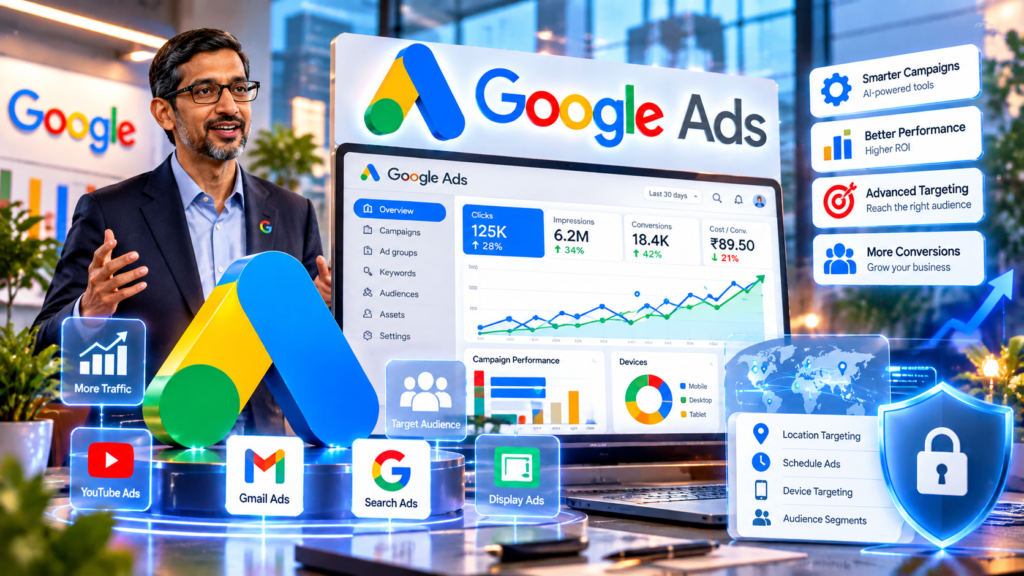
Google Ads new advertiser tools: Reporting is another area receiving attention. Google Ads has been adding tools that help advertisers compare their results with broader market performance.
The Google Ads API now includes competitive benchmark metrics that can show an advertiser’s position among other advertisers through percentile-based data. This can help businesses answer questions such as whether their conversion rate, cost per lead or impression share is relatively strong or weak within a category
For example, a digital lender may discover that its cost per lead is higher than the market benchmark, while its conversion rate is competitive. This insight could suggest that the company needs to improve ad relevance, landing pages or bidding strategy rather than simply increasing its budget.
Google has also expanded reporting features for AI-powered campaign types. Unified reporting can make it easier to analyse results across campaigns and evaluate the contribution of automated advertising systems.
Google Ads new advertiser tools: Still, benchmark data should not be treated as an absolute target. Industry, location, product price, brand recognition and customer intent can all affect performance.
Performance Max and Campaign Management Updates
Google Ads new advertiser tools: Max continues to be one of Google’s most important campaign types. It allows advertisers to access multiple Google channels through a single campaign, including Search, YouTube, Discover, Gmail and Display.
Recent developer updates include the ability to generate a Performance Max draft campaign from an existing Smart campaign. This could simplify the process for small businesses that want to move from older campaign formats to more automated solutions.
Google Ads new advertiser tools: Google has also introduced asset-group URL options for Performance Max. Advertisers can configure tracking templates, custom parameters and final URL suffixes at the asset-group level. This gives marketing teams more flexibility when tracking traffic from different product categories, promotions or landing pages.
For Indian advertisers, accurate tracking is essential because campaigns may be divided by state, language, product category or customer segment. Proper UTM parameters can help businesses identify which campaigns are generating valuable visitors and sales.
What Indian Advertisers Should Do Next
Businesses should not adopt every new tool without testing it. A practical approach is to begin with accurate conversion tracking, strong first-party data and clear campaign objectives.
Advertisers should also prepare high-quality assets in different formats and languages. AI can support production, but human review remains necessary for accuracy, brand tone and local relevance.
Campaign results should be evaluated using business outcomes rather than surface-level metrics alone. Clicks and impressions are useful, but qualified leads, completed purchases, repeat customers and profit are usually more meaningful.
Finally, companies should test new features gradually. A business can compare an AI-assisted creative against an existing asset, or test improved audience signals in one campaign before applying the strategy across its entire account.
Google Ads new advertiser tools: Conclusion Human Strategy Still Matters
Google Ads new advertiser tools: is becoming more automated, but successful advertising still depends on human decision-making. New tools can accelerate creative production, improve measurement and provide stronger campaign controls, yet they cannot replace a clear understanding of customers and business goals.
For Indian advertisers, the opportunity is significant. Brands that combine accurate data, relevant local messaging, careful experimentation and responsible use of AI may be able to reach customers more efficiently. The most effective approach will not be to surrender control to automation, but to use Google’s new tools as part of a thoughtful and measurable marketing strategy.
Grow your business online with SEO, Performance Marketing, Social Media Marketing, Website Development, Content Marketing, and Graphic Design & Branding services. Visit the DIGI SIKHO Digital Marketing Agency website to explore all our Digital Marketing Services.
TIKVORA — Your trusted source for AI News, AI Tools, Technology, Startups, Innovation, Machine Learning, Generative AI, and Digital Trends. Fast, clear, and reliable updates on the technologies shaping the future.