
Google to Test AI: Google is set to make history by launching its first artificial intelligence hardware into orbit. In a bold move dubbed Project Suncatcher, the tech giant will send a prototype satellite carrying its custom-built Tensor Processing Units (TPUs) into low-Earth space next week. This isn’t just a publicity stunt—it’s a serious engineering experiment to see if the kind of AI chips that power services like Search and Gemini can survive the brutal conditions of spaceflight and operate reliably outside Earth’s atmosphere.
Google to Test AI: What Is Project Suncatcher?
Google to Test AI: Project Suncatcher is Google’s long-term research initiative, first announced in November 2025, to explore whether space could one day host scalable AI computing infrastructure. Think of it as a “moonshot” in the literal sense: the company wants to understand if building data centers in orbit is physically and technically feasible.
The name itself is a nod to the idea of capturing abundant solar energy in space, where sunlight is constant and uninterrupted by weather or night cycles. But before dreaming up orbital server farms, Google needs hard data on how its hardware behaves beyond the protective bubble of Earth’s
The MVP Satellite: A Mini Data Center in a Refrigerator-Sized Box
Google to Test AI: The first test satellite, internally called MVP (Minimum Viable Product), is scheduled to launch on October 1, 2026, from Vandenberg Space Force Base in California. It will ride aboard SpaceX’s Transporter-18 rideshare mission on a Falcon 9 rocket, sharing the flight with other small satellites.
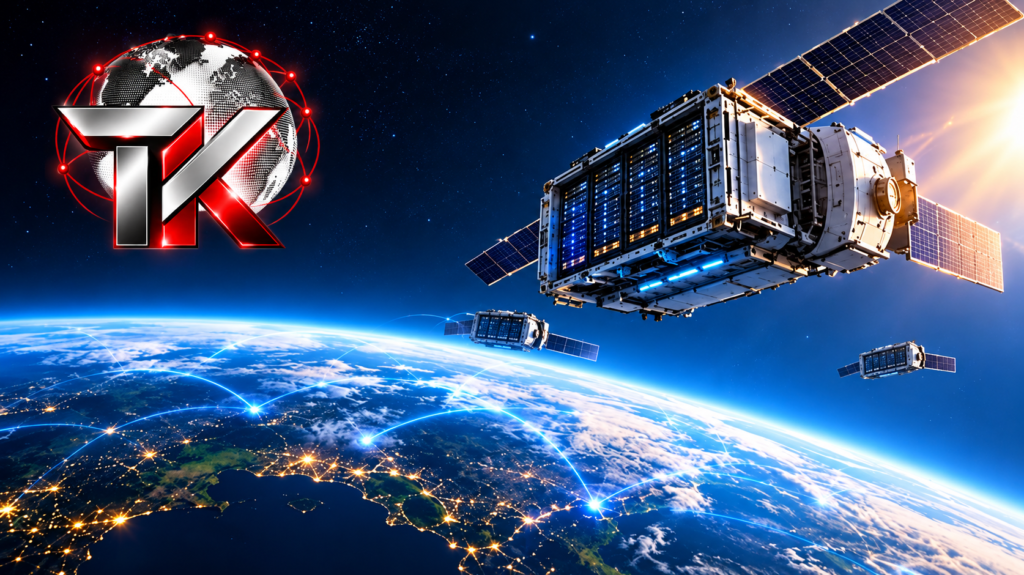
Built in partnership with Planet Labs, a San Francisco-based space company, the MVP satellite is about the size of a refrigerator and carries four Google TPU chips. Together, these TPUs deliver computing power roughly equivalent to a single data center server on Earth—enough to run simple AI queries, but more importantly, enough to stress-test the hardware under real orbital conditions.
Solar panels on the satellite will generate approximately one kilowatt of power to run the TPUs and supporting systems. The mission is planned to last about one year, during which Google engineers will closely monitor performance, though the satellite itself is expected to remain in orbit for up to six years before eventually re-entering Earth’s atmosphere and burning up.digitaltoday.
Why Put AI Chips in Space?
Google to Test AI: Google to Test AI: At first glance, launching computers into orbit sounds like science fiction. But Google’s motivation is rooted in very real, very pressing problems facing the AI industry today.
The Power and Cooling Bottleneck
AI models are getting bigger and more demanding by the month. Training and running these models requires massive amounts of electricity and sophisticated cooling systems to prevent chips from overheating. On Earth, data centers consume staggering amounts of power and water, leading to rising costs, grid strain, and environmental concerns.
Space offers two potential advantages:
- Unlimited solar energy: In orbit, solar panels can capture sunlight 24/7 without clouds, night, or seasonal changes interrupting supply.
- Natural vacuum cooling: The vacuum of space allows heat to radiate away efficiently, potentially reducing the need for energy-intensive cooling systems used in terrestrial data centers.
If these advantages can be harnessed, space-based AI infrastructure could one day help ease the power crunch limiting AI growth on Earth.
Reducing Latency for Global Applications
Google to Test AI: Another long-term possibility is reducing latency for certain applications. Satellites in low-Earth orbit can communicate with ground stations around the world in milliseconds, potentially enabling faster AI responses for users in remote or underserved regions.
What Will the Mission Actually Test?
Google is clear that this first flight is not about proving that an operational orbital data center works. Instead, it’s a fact-finding mission designed to answer fundamental engineering questions.
The MVP satellite will be subjected to three major stressors:
1. Launch Vibrations and Forces
The rocket launch itself is violent. Chips and circuit boards must survive intense vibrations, acceleration, and shock as the Falcon 9 blasts through the atmosphere. Google needs to confirm that its TPUs don’t crack, disconnect, or fail under these conditions.
2. Space Radiation
Google to Test AI: Beyond Earth’s protective magnetic field, satellites are bombarded by high-energy particles from the sun and deep space. This radiation can corrupt data, cause bit flips in memory, and gradually degrade electronic components. Google will measure how well the TPUs tolerate this radiation environment and whether error-correction systems work as expected.
3. Extreme Thermal Swings
In low-Earth orbit, temperatures swing dramatically between direct sunlight and Earth’s shadow. Chips must operate reliably through these thermal extremes without overheating or freezing. The vacuum of space also changes how heat dissipates, requiring new thermal management approaches.
Elon Musk Reacts: “One Small Step for TPUs”
Google to Test AI: The announcement drew a playful response from SpaceX founder Elon Musk, whose rockets will carry Google’s payload. On social media, Musk quipped that this was “one small step for TPUs,” echoing Neil Armstrong’s famous moon-landing quote.
While Musk’s comment was lighthearted, it underscores the significance of the moment: for the first time, AI accelerator chips designed for terrestrial data centers are heading to space as part of a serious research program.
What Comes Next After MVP?
Google to Test AI: If the MVP mission succeeds in gathering useful data, Google has already outlined the next phase of Project Suncatcher.
In 2027, the company plans to launch two more satellites equipped with high-bandwidth laser communication links. These optical inter-satellite links would allow multiple spacecraft to talk to each other at high speeds, forming a distributed network capable of handling larger AI workloads across a cluster of satellites.
This would be a critical step toward proving that space-based AI infrastructure can scale beyond a single satellite.
Why This Matters for India and the Global Tech Landscape

Google to Test AI: For India’s booming tech and startup ecosystem, Project Suncatcher signals a new frontier in AI innovation. As Indian companies race to build AI applications in healthcare, agriculture, finance, and education, the underlying computing infrastructure will become increasingly important.
Space-based AI could eventually offer:
- Lower-cost compute: If solar power in space reduces energy costs, AI services could become cheaper to run.
- Better connectivity: Satellite networks could bring AI capabilities to rural and remote areas where ground infrastructure is limited.
- New research opportunities: Indian universities and startups could collaborate on space-AI experiments, joining a global effort to push the boundaries of what’s possible.
Google to Test AI: The Bigger Picture: AI Meets the Final Frontier
Google’s Project Suncatcher is more than a hardware test—it’s a statement of ambition. By sending TPUs into orbit, the company is betting that the future of AI may not be confined to Earth.
Google to Test AI: Whether this leads to practical orbital data centers remains to be seen. But the MVP mission will provide the first real-world data on how AI chips behave in space, laying the groundwork for whatever comes next.
Stay connected with the latest Indian News, World News, Breaking News, Latest Updates, Political News, Business & Stock Market, Sports, Technology & Digital, Entertainment, and Trending News with SACHKI KHABAR. Get fast, clear, and reliable updates on what is happening across India and around the world. Visit SACHKI KHABAR for the latest stories and important developments.
TIKVORA — Your trusted source for AI News, AI Tools, Technology, Startups, Innovation, Machine Learning, Generative AI, and Digital Trends. Fast, clear, and reliable updates on the technologies shaping the future.
- Warning: 2026 Google September Spam Update Continues – 3 Badi Wajah & Outlook
- RBI MPC October 2026 5 7: Repo Rate in Focus as Inflation Risks Return
- 5 Best & Exclusive Reports: Jio Platforms IPO 21 October की संभावना!
- Amazon Great Indian Festival 2026 Begins on October 8: Major Discounts, Bank Offers and Festive Shopping Deals Announced
- iPhone 18 Pro Max network problems: What Indian Buyers Need to Know