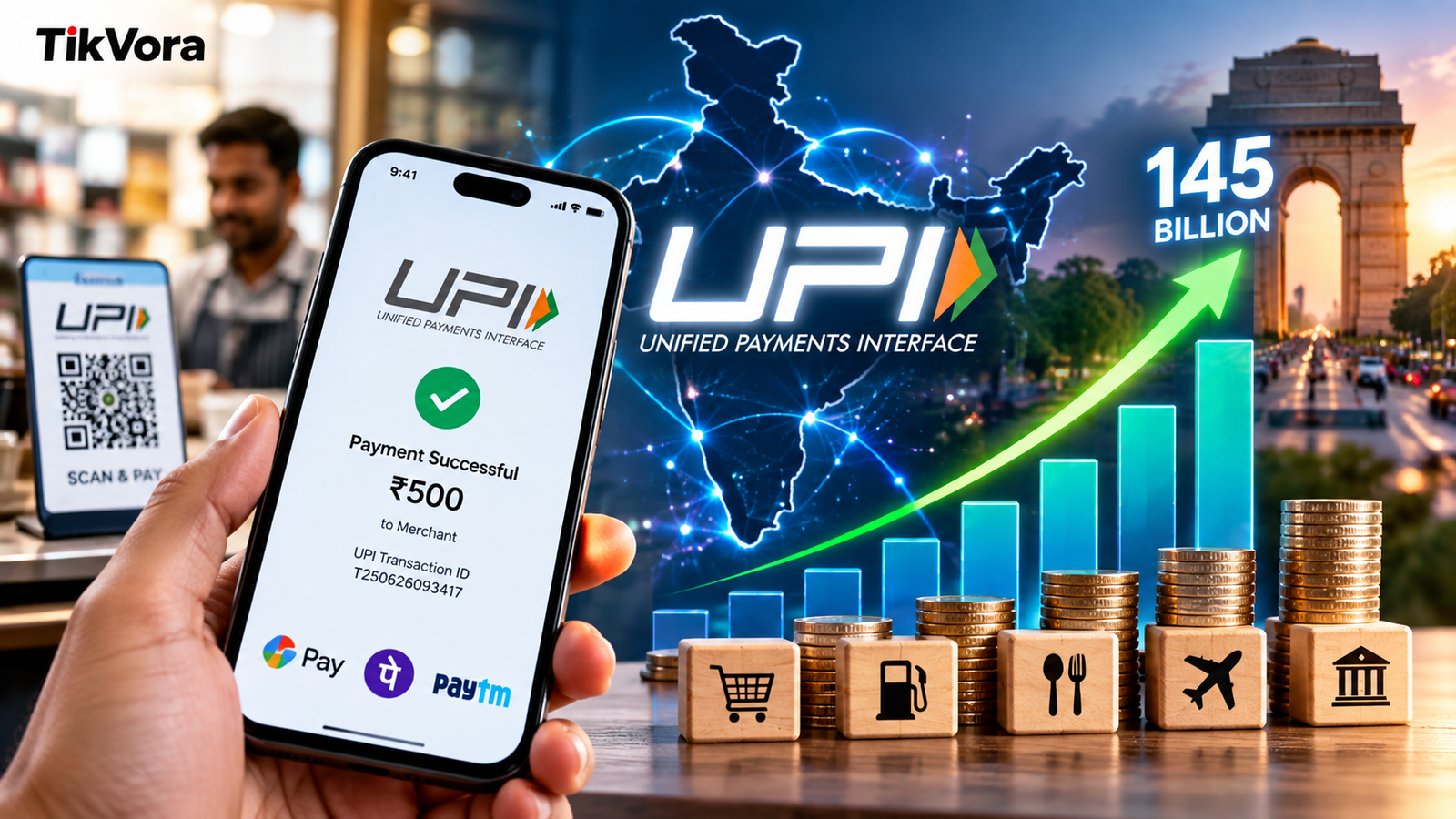
UPI transactions 145 billion H1 FY27 UPI transactions 145 billion H1 FY27 India’s Unified Payments Interface has once again shown why it has become the country’s default way to pay. In the first half of financial year 2026-27, UPI processed around 145 billion transactions, a 27 per cent rise from 114 billion transactions recorded in the same April-September period a year earlier, according to data released by the National Payments Corporation of India (NPCI).money.
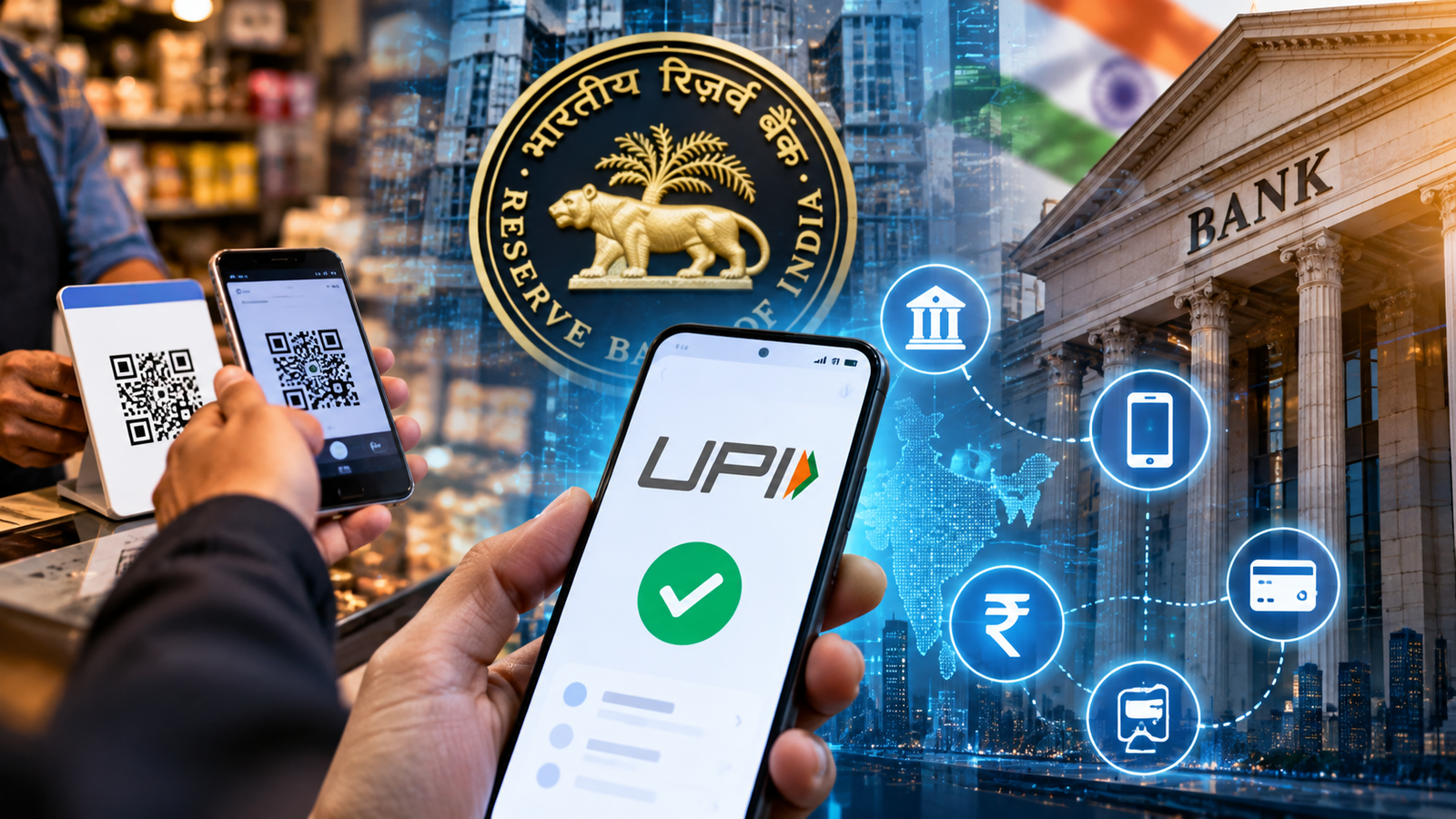
The growth is not merely a statistical milestone. It reflects how deeply instant digital payments have entered daily life in India—from tea stalls and vegetable vendors to supermarkets, fuel stations, hospitals, schools, e-commerce platforms and large corporate payments. UPI has moved beyond being a convenience; for millions of Indians, it is now the primary financial interface.
UPI transactions 145 billion H1 FY27 A Record Six Months for UPI
UPI transactions 145 billion H1 FY27 Between April and September of the current financial year, UPI recorded approximately 145 billion transactions. This is a sharp increase over the 114 billion transactions processed during the first half of the previous financial year.money.
UPI transactions 145 billion H1 FY27 In value terms, the platform handled about Rs 177 lakh crore during the six-month period, compared with Rs 148 lakh crore in the corresponding period last year. That represents a 20 per cent rise in value, slightly lower than the 27 per cent growth seen in transaction volume.timesofindia.
The difference between volume growth and value growth is important. It suggests that while UPI is being used far more frequently, the average ticket size has not risen at the same pace. In practical terms, Indians are making more small and medium-value payments through UPI—paying for groceries, travel, food delivery, utility bills, school fees, rent, and everyday purchasesUPI transactions 145 billion H1 FY27.
Why the Numbers Matter
A jump of 31 billion transactions in just six months is a massive addition to India’s payment ecosystem. It means that, on average, UPI is handling hundreds of millions of transactions every day.UPI transactions 145 billion H1 FY27
The scale becomes clearer when compared with the broader economy. UPI’s Rs 177 lakh crore in transaction value during H1 FY27 is not just a payments statistic; it represents commercial activity flowing through a single public digital infrastructure. Every transaction represents a purchase, a transfer, a bill payment, a merchant sale, or a financial service interaction.timesofindia.UPI transactions 145 billion H1 FY27
For policymakers, the data confirms that digital payments have become central to India’s consumption economy. For banks and fintech companies, it underlines both the opportunity and the operational challenge of maintaining a system that must remain fast, secure and available at such enormous scale.
From Cash Replacement to Everyday Infrastructure
When UPI was launched, the central question was whether it could reduce India’s dependence on cash. That question has largely been answered. Today, UPI is used not only as an alternative to cash but often as the first choice for payment.UPI transactions 145 billion H1 FY27
A customer buying vegetables from a street vendor, paying an auto-rickshaw driver, ordering food through an app, splitting a restaurant bill with friends, or paying a monthly electricity bill can all complete the transaction in seconds. The process requires no card swiping, no ATM withdrawal and often no physical cash.UPI transactions 145 billion H1 FY27
This shift has been especially important for small merchants. Earlier, accepting digital payments required point-of-sale machines, card infrastructure and sometimes higher setup costs. UPI changed that by allowing a merchant to receive money through a QR code and a bank account. As a result, digital acceptance expanded rapidly across small shops, local markets and service providers.
What Is Driving the Growth?
Several forces have combined to push UPI volumes higher.UPI transactions 145 billion H1 FY27
First, smartphone penetration continues to expand across urban and rural India. As more people own affordable smartphones and access mobile data, the base of potential digital-payment users keeps widening.
Second, UPI’s simplicity remains its biggest advantage. A user does not need to remember long card numbers or navigate complicated banking processes. A mobile number, UPI ID, QR code or bank-account details are enough to send money.UPI transactions 145 billion H1 FY27
Third, merchant adoption has become nearly universal in many parts of the country. QR codes are now visible outside small kirana stores, roadside stalls, pharmacies, salons, parking booths and public transport points.
Fourth, the ecosystem has expanded through apps, banks, fintech platforms and payment service providers. Consumers may use different applications, but the underlying UPI network connects them seamlessly.
Finally, recurring payments, credit-linked products, UPI AutoPay and business payments are adding new use cases beyond simple person-to-person transfers.
September Shows a Small Dip
Despite the strong half-yearly performance, the latest monthly data offers a note of caution. September saw a marginal month-on-month decline in both UPI transaction volume and value.
This does not necessarily signal a reversal of the larger trend. Monthly payment data can fluctuate because of seasonal spending, holidays, billing cycles, weather-related disruptions, changes in consumer behaviour or technical factors. However, it does show that growth is not perfectly linear.UPI transactions 145 billion H1 FY27
Even so, the broader direction remains clear: UPI’s six-month total of 145 billion transactions demonstrates sustained adoption rather than a short-lived surge.money.UPI transactions 145 billion H1 FY27
The MDR Question Enters the Picture
The strong growth numbers have arrived at a sensitive time for the payments industry. Reports indicate that a proposed 0.4 per cent Merchant Discount Rate, or MDR, on high-value UPI transactions above Rs 2,000 is expected to take effect from October 15.money.UPI transactions 145 billion H1 FY27
MDR is the fee charged to merchants for accepting digital payments. Its introduction for certain high-value UPI transactions has triggered debate among traders, retailers and industry bodies.
Supporters argue that a reasonable fee could help payment providers, banks and technology companies recover costs associated with running and securing a massive real-time payment network. They also say that charging only larger transactions may protect small-ticket payments, which form a large share of UPI activity.UPI transactions 145 billion H1 FY27
Critics, however, worry that any additional cost could discourage merchants from accepting UPI, especially in sectors with thin profit margins. Some trader groups have already protested against the proposed charge. In Gujarat, traders observed a “No UPI Day” to oppose the proposed 0.4 per cent MDR on transactions above Rs 2,000, arguing that it would burden retailers.
The challenge for policymakers will be to balance sustainability of the payments ecosystem with the need to keep digital payments affordable and widely accepted.UPI transactions 145 billion H1 FY27
Impact on Small Merchants
Small merchants are at the centre of this debate. For a neighbourhood grocery store, a tailor, a food stall owner or a small service provider, even a small percentage fee on higher-value payments can affect margins.
At the same time, many merchants recognise that UPI brings customers who may not carry cash. It reduces the risk of handling physical money, simplifies record-keeping and enables faster settlement.
The practical outcome will depend on how the MDR is implemented, who ultimately bears the cost, and whether merchants pass it on to consumers. If businesses absorb the charge, their margins may shrink. If they pass it on, consumers may face slightly higher prices for certain goods and services.
For India’s digital-payment story, the key test will be whether UPI continues to feel effortless and inexpensive for both sides of a transaction.
A Boost for Financial Inclusion
Beyond commerce, UPI has played a major role in financial inclusion. It allows users to access banking services through a mobile phone without needing to visit a branch. For people in smaller towns and rural areas, this can reduce travel time, paperwork and dependence on cash.
Women, gig workers, students, migrant workers and first-time banking customers have all benefited from easier access to digital payments. A worker receiving wages digitally, a family receiving remittances, or a small entrepreneur collecting payments from customers can participate more directly in the formal economy.
The rise to 145 billion transactions in six months suggests that this access is no longer limited to metropolitan cities. UPI’s reach has expanded into Tier-2 and Tier-3 towns, villages and semi-urban markets.money.UPI transactions 145 billion H1 FY27
Challenges Behind the Growth
Rapid growth brings its own set of challenges.
Fraud remains a serious concern. As digital payments grow, criminals also adapt through phishing links, fake customer-care numbers, QR-code scams, social-engineering tactics and unauthorised access attempts. Consumer awareness and strong fraud-detection systems are essential.
System reliability is another issue. When UPI handles such enormous daily volumes, even short technical disruptions can affect millions of users and businesses. Banks, payment apps and NPCI must continue investing in capacity, monitoring and outage management.
Data privacy and cybersecurity also require constant attention. A payment system that touches so much economic activity must protect user information while remaining fast and user-friendly.
Finally, the industry must ensure that digital literacy keeps pace with adoption. A user who can make a payment easily must also understand how to identify suspicious requests, avoid sharing sensitive information and report fraud promptly.
What the Future Looks Like
The H1 FY27 numbers indicate that UPI is likely to continue expanding. The platform’s growth is supported by consumer habit, merchant acceptance, government push for digital transactions and continuous innovation by fintech firms.UPI transactions 145 billion H1 FY27
Future growth may come from several areas: international acceptance of UPI, credit on UPI, voice-based payments, offline payment solutions, greater use by businesses, and deeper integration with e-commerce and public services.
However, the next phase will not be only about increasing transaction counts. It will also be about improving trust, reducing fraud, ensuring fair economics for payment participants and maintaining a smooth experience for users.
A Defining Shift in Indian Payments
India’s payment landscape has changed dramatically in a short period. UPI has turned instant digital payment into a routine action for hundreds of millions of people. The 145 billion transactions recorded in the first half of FY27 show that this is not a temporary trend but a structural shift in how money moves across the country.money.
The platform’s next challenge is to preserve the qualities that made it successful—simplicity, low cost, speed and broad acceptance—while managing the pressures that come with scale. If it can do that, UPI will remain not just India’s most popular payment method, but one of the most influential digital public infrastructures in the world.
The numbers are impressive. But the real story is larger: India is steadily building an economy where a payment can be made in seconds, by almost anyone, almost anywhere
TIKVORA — Your trusted source for AI News, AI Tools, Technology, Startups, Innovation, Machine Learning, Generative AI, and Digital Trends. Fast, clear, and reliable updates on the technologies shaping the future.
Stay connected with the latest Indian News, World News, Breaking News, Latest Updates, Political News, Business & Stock Market, Sports, Technology & Digital, Entertainment, and Trending News with SACHKI KHABAR. Get fast, clear, and reliable updates on what is happening across India and around the world. Visit SACHKI KHABAR for the latest stories and important developments.