
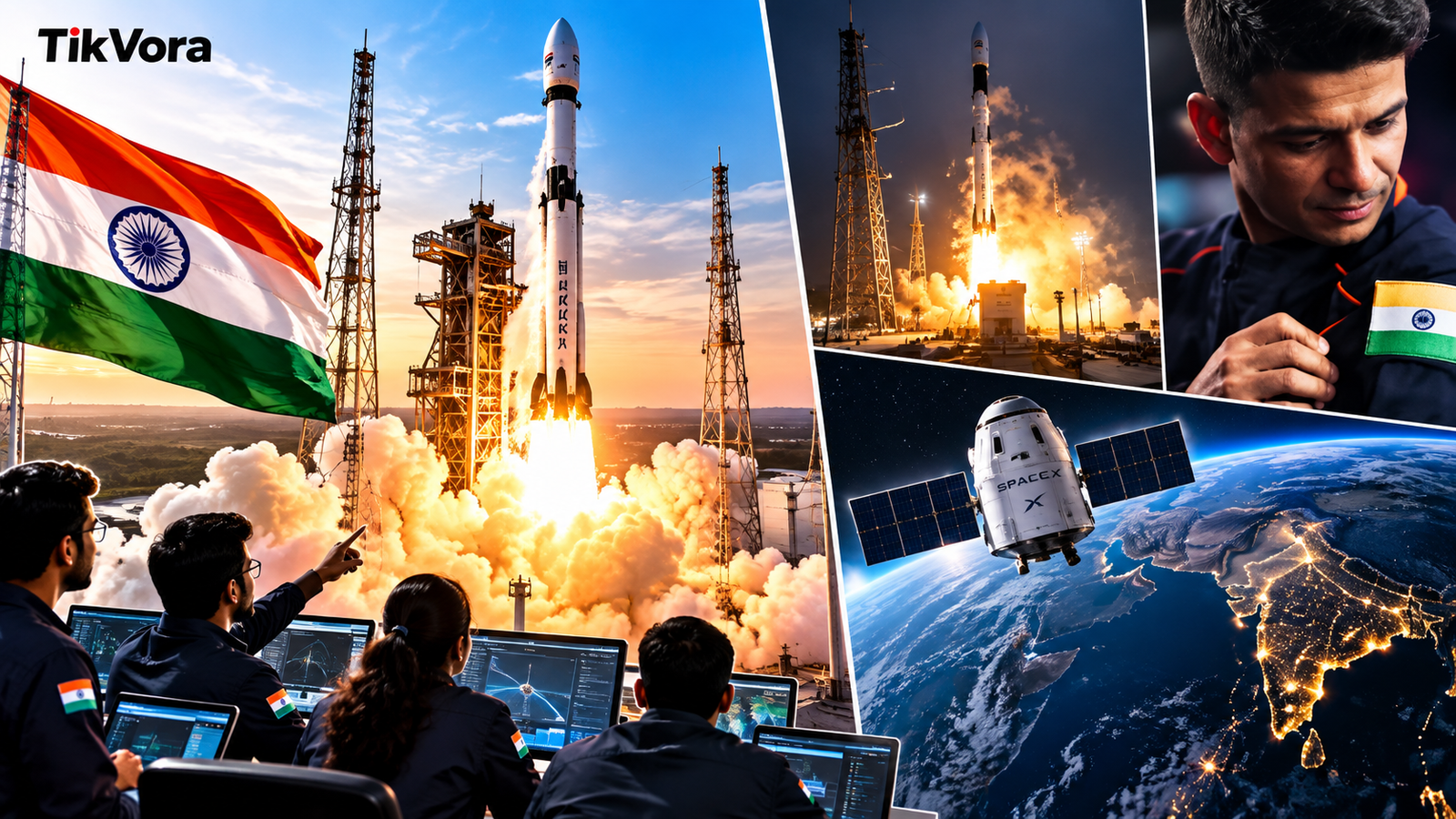
India space startups SpaceX Success In the early hours of October 2, 2026, India’s private space sector marked another significant milestone as multiple Indian payloads successfully reached orbit aboard SpaceX’s Falcon 9 rocket. This mission, part of SpaceX’s Transporter-18 rideshare program, underscores how far India’s homegrown space startups have come in just a few years—transforming from ambitious ideas into companies capable of delivering cutting-edge technology to space alongside global leaders like Elon Musk’s SpaceX.
India space startups SpaceX Success The October 2 Launch: What Happened
India space startups SpaceX Success The Transporter-18 mission lifted off from Vandenberg Space Force Base in California, carrying a diverse portfolio of satellites and experimental payloads from around the world. Among them were critical contributions from Indian firms, including Bengaluru-based Pixxel Space and Hyderabad’s Dhruva Space, both of which have emerged as key players in India’s rapidly expanding commercial space ecosystem.
Pixxel Space deployed three additional Firefly hyperspectral imaging satellites, completing the first phase of its six-satellite constellation. These satellites are designed to capture highly detailed images of Earth across hundreds of spectral bands, enabling applications ranging from precision agriculture to environmental monitoring and mineral exploration. Meanwhile, Dhruva Space’s LEAP-2 satellite marked another first: it was the first time a private Indian entity handled complete in-house satellite integration with SpaceX’s launch vehicle, building on the company’s earlier experience with LEAP-1.
Also on board was TakeMe2Space’s MOI-1A spacecraft, a sub-50 kg satellite equipped with Nvidia Orin NX edge-computing processors. Scheduled for deployment on this mission, MOI-1A aims to become India’s first orbital computing satellite, capable of processing data in space rather than transmitting raw information back to Earth—a capability that could revolutionize how satellites handle everything from climate data to real-time disaster response.
Why SpaceX Matters for Indian Startups
India space startups SpaceX Success For Indian space startups, partnering with SpaceX isn’t just about accessing reliable launch services—it’s about credibility, timing, and cost-effectiveness. SpaceX’s Falcon 9 has become the workhorse of the global small-satellite launch industry, offering frequent rideshare missions that dramatically reduce the cost per kilogram of getting payloads to orbit.
More importantly, successful deployments on SpaceX missions signal to investors, customers, and international partners that Indian startups can meet the rigorous technical and safety standards required by one of the world’s most demanding launch providers. This validation is crucial for companies trying to compete in a global market where reliability and track record often matter more than nationality.India space startups SpaceX Success
TakeMe2Space’s decision to launch MOI-1A on Transporter-18 follows a successful technology-demonstration mission in late 2024, which proved the company’s ability to upload applications, perform AI inference in orbit, and download results. Now, with SpaceX as its launch partner, the startup is positioning itself as a pioneer in orbital edge computing—a niche that could attract significant commercial and government interest in the coming years.
The Bigger Picture: India’s Private Space Boom
India space startups SpaceX Success The October 2 launch didn’t happen in isolation. It’s part of a broader transformation that has seen India’s space sector undergo its most significant changes since the founding of ISRO. In 2014, India had just one registered space startup. By August 2026, that number had surged to around 440, with the sector attracting over $618 million in private investment as of March 31, 2026.pib.
India space startups SpaceX Success This explosion of activity follows policy reforms initiated in 2020, when the Indian government opened the space sector to private participation, allowing companies to build rockets, launch satellites, and offer commercial services previously monopolized by ISRO. The creation of IN-SPACe (Indian National Space Promotion and Authorisation Centre) provided a regulatory framework, while initiatives like the Earth Observation Public-Private Partnership (EO-PPP) brought government oversight together with private investment to develop India’s first privately owned Earth observation satellite constellation.
The results have been striking. Skyroot Aerospace, founded in 2018, became India’s first space-tech unicorn in May 2026 with a $1.1 billion valuation after raising $60 million from investors including Singapore’s GIC. In July 2026, Skyroot achieved what no Indian private company had done before: successfully launching its Vikram-1 rocket into orbit from Sriharikota, making India only the third country—after the United States and China—with a private company capable of orbital launches.India space startups SpaceX Success
The Vikram-1 mission, dubbed “Aagman” (Sanskrit for “arrival”), placed six payloads into orbit and marked the first of two planned test flights before Skyroot begins commercial operations in 2027. Prime Minister Narendra Modi hailed the achievement as “opening new frontiers and accelerating innovation,” signaling strong government support for the private space sector’s growth.
Key Players Beyond Skyroot
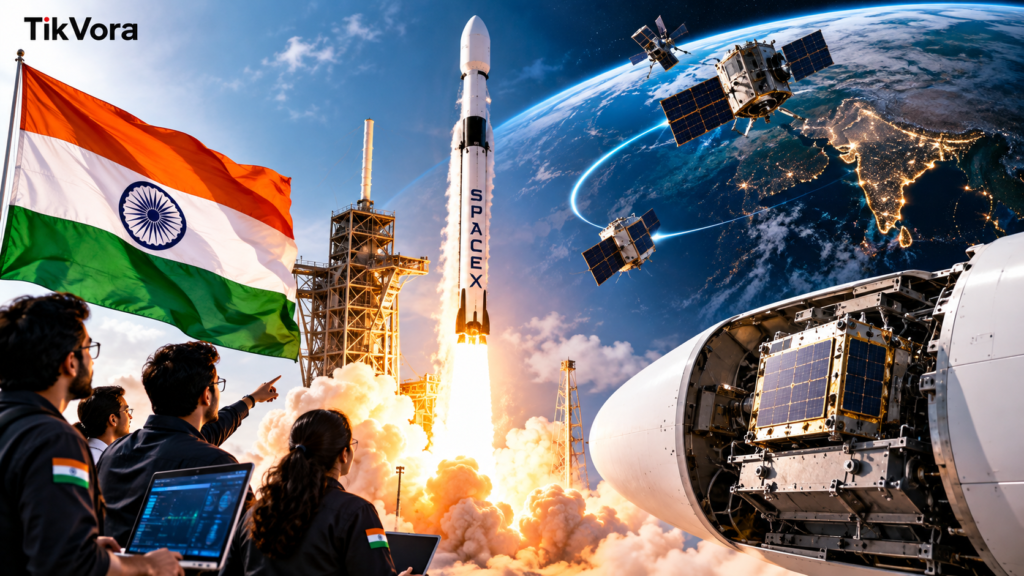
While Skyroot’s Vikram-1 launch grabbed headlines, other Indian startups are making equally important strides. Pixxel Space, founded by two BITS Pilani alumni, has now placed six hyperspectral imaging satellites in orbit and plans to expand its constellation to 18–24 satellites. The company’s technology offers unprecedented resolution for applications like crop health monitoring, water resource management, and urban planning—services that could generate significant revenue from both government and commercial clients.business
Agnikul Cosmos, another Chennai-based startup, has focused on developing advanced propulsion systems, including 3D-printed rocket engines. In 2026, the company successfully conducted a cluster firing of four such engines, demonstrating India’s growing capabilities in indigenous propulsion technology.
India space startups SpaceX Success Dhruva Space, meanwhile, has positioned itself as a satellite bus manufacturer and mission integrator, working with both Indian and international customers. The company’s LEAP series of satellites showcases its ability to handle end-to-end mission development, from design to launch integration.
Diggantara, yet another notable player, is developing space situational awareness systems to track debris and other objects in orbit—a critical capability as low Earth orbit becomes increasingly crowded.India space startups SpaceX Success
Challenges Ahead: Talent, Funding, and Competition
India space startups SpaceX Success Despite the optimism, India’s private space sector faces significant hurdles. One of the biggest is talent. As the sector expands toward its ambitious goal of capturing a $100 billion share of the global space economy, a shortage of specialized skills in areas like propulsion systems, orbital mechanics, and satellite manufacturing is becoming apparent. Industry leaders and government agencies are now working to bridge this gap through targeted training programs and partnerships with engineering institutions.
India space startups SpaceX Success Funding, while growing, remains concentrated among a handful of well-known startups. Skyroot and Pixxel have each raised more than $150 million, but many smaller companies struggle to secure the capital needed to move from prototype to commercial operations. Investors are also becoming more selective, pushing startups to demonstrate clear revenue models and scalability rather than just technical feasibility.business-
Competition is another factor. Indian startups aren’t just competing with each other—they’re up against established players from the United States, Europe, and China, all of whom have deeper pockets and longer track records. SpaceX itself, while a launch partner, is also a potential competitor in the small-satellite market through its Starlink constellation and future rideshare pricing strategies.India space startups SpaceX Success
ISRO’s Evolving Role
India space startups SpaceX Success As private companies take on more routine launch and satellite deployment tasks, ISRO is shifting its focus toward more ambitious missions. The agency’s recent achievements—including Chandrayaan-3’s historic soft landing near the Moon’s south pole in 2023, the Space Docking Experiment (SPADEX) in January 2025 that made India the fourth nation to demonstrate autonomous space docking, and Group Captain Shubhanshu Shukla’s journey to the International Space Station aboard Axiom-4 in June 2025—showcase ISRO’s continued leadership in high-profile exploration and human spaceflight.
This division of labor makes strategic sense. By allowing private companies to handle commercial launches and Earth observation services, ISRO can concentrate resources on deep-space missions, crewed spaceflight under the Gaganyaan program, and developing technologies that private firms aren’t yet ready to tackle. At the same time, ISRO’s infrastructure, expertise, and regulatory support through IN-SPACe remain critical enablers for the private sector’s growth.India space startups SpaceX Success
What This Means for India’s Space Ambitions
India space startups SpaceX Success The success of Indian payloads on SpaceX’s Transporter-18 mission is more than a technical achievement—it’s a statement of intent. It shows that Indian startups can design, build, and operate satellites that meet international standards, and that they can integrate seamlessly with global launch providers.
For the Indian government, this validates the 2020 reforms that opened the space sector to private participation. For investors, it signals that Indian space startups are moving beyond the prototype phase into commercial viability. And for the startups themselves, it offers a roadmap: leverage global launch partnerships like SpaceX while building indigenous capabilities in satellite manufacturing, propulsion, and data services.India space startups SpaceX Success
Looking ahead, India plans to send astronauts into space under Gaganyaan, launch an orbiter to Venus by 2028, and build its own space station by 2035. Private companies are expected to play an increasingly important role in all of these ambitions, providing everything from crew transport components to orbital infrastructure.
India space startups SpaceX Success The Road to 2030 and Beyond
India space startups SpaceX Success By 2030, industry analysts project that India could capture a significant share of the global small-satellite launch market, currently dominated by companies like SpaceX, Rocket Lab, and Firefly Aerospace. Skyroot’s Vikram-1 is just the beginning—the company plans multiple commercial launches in 2027 and beyond, while competitors like Agnikul and Dhruva Space are developing their own orbital-class vehicles.
On the satellite side, constellations like Pixxel’s Firefly will generate continuous streams of data that can be sold to governments, agricultural firms, insurance companies, and environmental organizations. TakeMe2Space’s orbital computing platform could open entirely new markets for edge AI applications in space. And as more Indian startups achieve profitability, the sector will attract even more investment, creating a virtuous cycle of innovation and growth
India space startups SpaceX Success The October 2 SpaceX mission is a snapshot of this momentum in action. For Indian space startups, it’s proof that they can compete on the world stage—and that the sky is no longer the limit
Stay connected with the latest Indian News, World News, Breaking News, Latest Updates, Political News, Business & Stock Market, Sports, Technology & Digital, Entertainment, and Trending News with SACHKI KHABAR. Get fast, clear, and reliable updates on what is happening across India and around the world. Visit SACHKI KHABAR for the latest stories and important developments.
TIKVORA — Your trusted source for AI News, AI Tools, Technology, Startups, Innovation, Machine Learning, Generative AI, and Digital Trends. Fast, clear, and reliable updates on the technologies shaping the future.