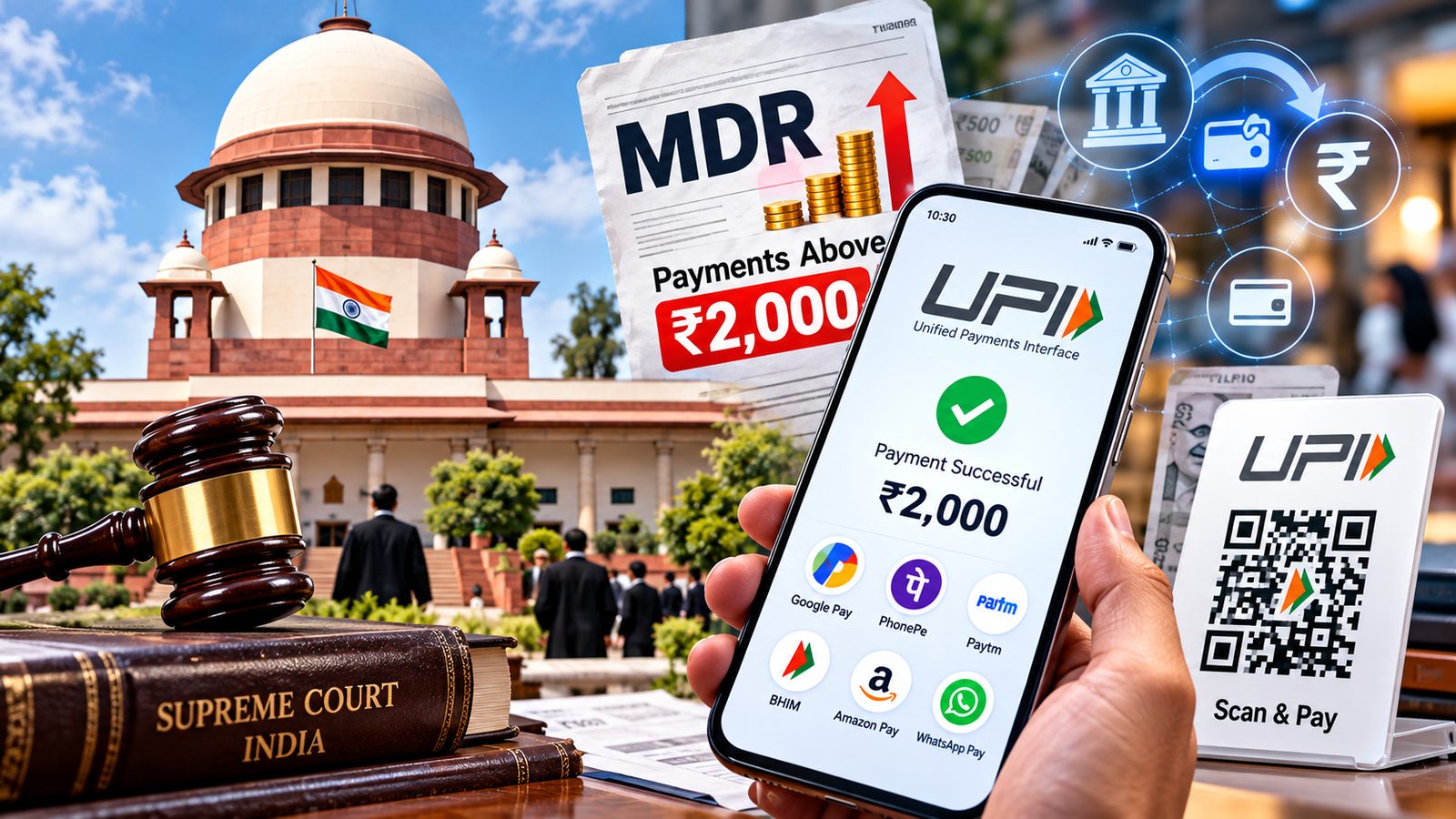
UPI MDR ₹2000: The Supreme Court of India is set to hear a significant public interest litigation (PIL) challenging the government’s newly introduced Merchant Discount Rate (MDR) on UPI transactions exceeding ₹2,000. This legal battle comes just weeks before the October 15, 2026, implementation date of the controversial fee structure, which ends nearly six years of completely free UPI payments for merchants and consumers alike.
UPI MDR ₹2000 : Background: What Triggered the Legal Challenge?
UPI MDR ₹2000: On September 14-15, 2026, the Union Finance Ministry, in coordination with the National Payments Corporation of India (NPCI), announced a new MDR framework that would impose a 0.4% charge on specified Person-to-Merchant (P2M) UPI transactions above ₹2,000. The move sent shockwaves through India’s digital payments ecosystem, which had enjoyed zero transaction fees since January 2020.
Under the new regime:
- General P2M UPI transactions above ₹2,000 attract 0.4% MDR
- Transactions of ₹75,000 and above are capped at ₹300 per transaction
- Payments up to ₹2,000 remain free
- Person-to-Person (P2P) transfers continue to be zero-cost
- Essential sectors like railways, telecom, insurance, fuel, and agricultural inputs pay a flat ₹5 per transaction above ₹2,000
- Capital market transactions (mutual funds, securities) attract 0.02% MDR, capped at ₹300
- Small merchants classified under P2PM receiving up to ₹1 lakh monthly through UPI enjoy zero MDRfortuneindia+3
The Supreme Court Petition: Key Arguments
UPI MDR ₹2000: The PIL was filed by advocate Anjan Datta through advocate Ashutosh Dubey on September 16, 2026, just one day after the government’s announcement. The petition raises several critical legal and procedural concerns:
Lack of Transparency and Public Consultation: The petitioner argues that the MDR framework was introduced without adequate statutory safeguards, transparency, or meaningful public consultation with stakeholders including merchant associations, consumer groups, and fintech companies.
UPI MDR ₹2000: Questionable Legal Basis: The petition challenges the amended Payment and Settlement Systems Act, particularly Section 10A, under which the new framework was notified. It questions whether the government had the proper legal authority to introduce differential treatment between UPI and RuPay debit card transactions.business.
Potential Burden on Consumers: A central argument is that while the MDR is technically levied on merchants, businesses will inevitably pass this additional cost onto customers through higher prices, effectively making UPI no longer “free” for end users.hindustantimes+1
UPI MDR ₹2000: Differential Treatment Concerns: The petition highlights the inconsistent treatment between UPI transactions and RuPay debit card transactions, questioning the rationale behind this regulatory distinction.
What the Petitioners Are Seeking
UPI MDR ₹2000: The PIL seeks multiple remedies from the Supreme Court:
- Quashing of the September 2026 MDR framework in its entirety
- A stay order preventing implementation pending the Court’s final adjudication
- Directions for fresh, transparent consultation with all stakeholders
- Clarification on the constitutional validity of the amended payment law
Government and NPCI’s Position
Despite mounting opposition from trader associations, opposition political parties, and now the Supreme Court petition, the government has made it clear that there will be no rollback of the decision. Officials argue that the MDR is essential for:
- Ensuring long-term sustainability of the UPI ecosystem
- Compensating banks and payment service providers for infrastructure costs
- Encouraging innovation and investment in digital payment infrastructure
- Creating a level playing field with other payment modes that already carry transaction
The government emphasizes that the framework is carefully calibrated to protect small merchants and everyday consumers while introducing reasonable charges for larger commercial transactions.business-
Industry and Political Reaction
The announcement triggered immediate backlash across multiple fronts:
UPI MDR ₹2000: Trader Associations: Major trade bodies announced they would encourage cash payments and potentially pass on the MDR costs to consumers, warning that the move could slow India’s digital payment adoption.
UPI MDR ₹2000: Opposition Parties: Congress leader Rahul Gandhi and other opposition figures criticized the move, with some calling it a “hidden tax” on digital transactions and demanding immediate rollback.
Fintech Sector: While some payment companies welcomed the move as necessary for ecosystem sustainability, others expressed concern about potential reduction in UPI transaction volumes.
What Happens Next at the Supreme Court
UPI MDR ₹2000: The Supreme Court is scheduled to hear the petition on Monday, September 28, 2026. Legal experts suggest several possible outcomes:business-
- Interim Stay: The Court could grant a temporary stay on the October 15 implementation while examining the petition’s merits
- Notice to Government: The Court may issue formal notice to the Finance Ministry and NPCI, seeking their detailed response
- Referral to Larger Bench: Given the constitutional questions raised, the matter could potentially be referred to a larger bench
- Dismissal: The Court could dismiss the petition, allowing the framework to proceed.
UPI MDR ₹2000: Broader Implications for India’s Digital Payments Future
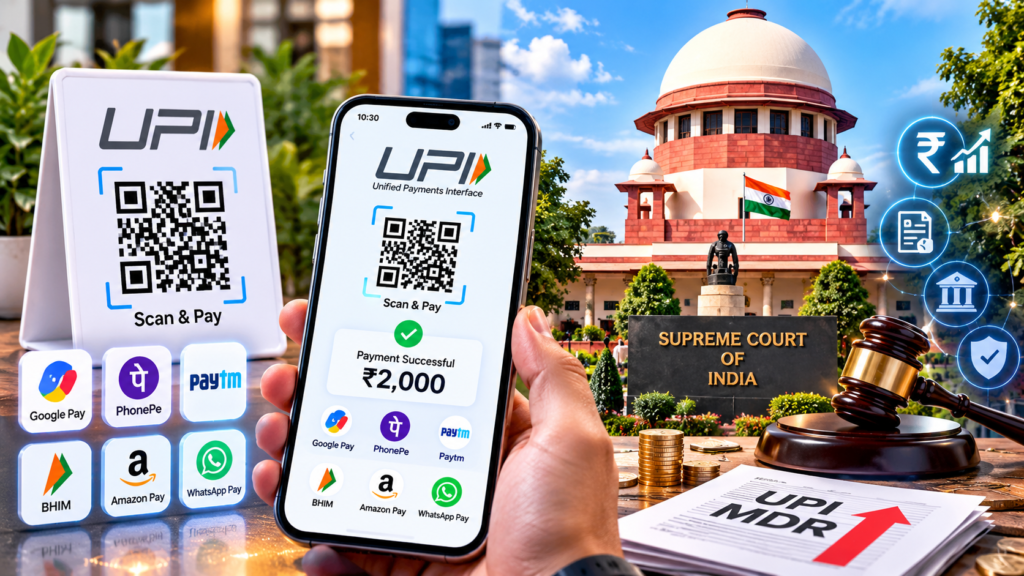
Regardless of the Supreme Court’s decision, this case represents a pivotal moment for India’s digital payments landscape. The outcome will likely influence:
- Future regulatory approaches to fintech and payment innovations
- The balance between promoting financial inclusion and ensuring commercial viability
- India’s position as a global leader in real-time payment systems
- Consumer trust and adoption patterns for digital payment methodsbusiness
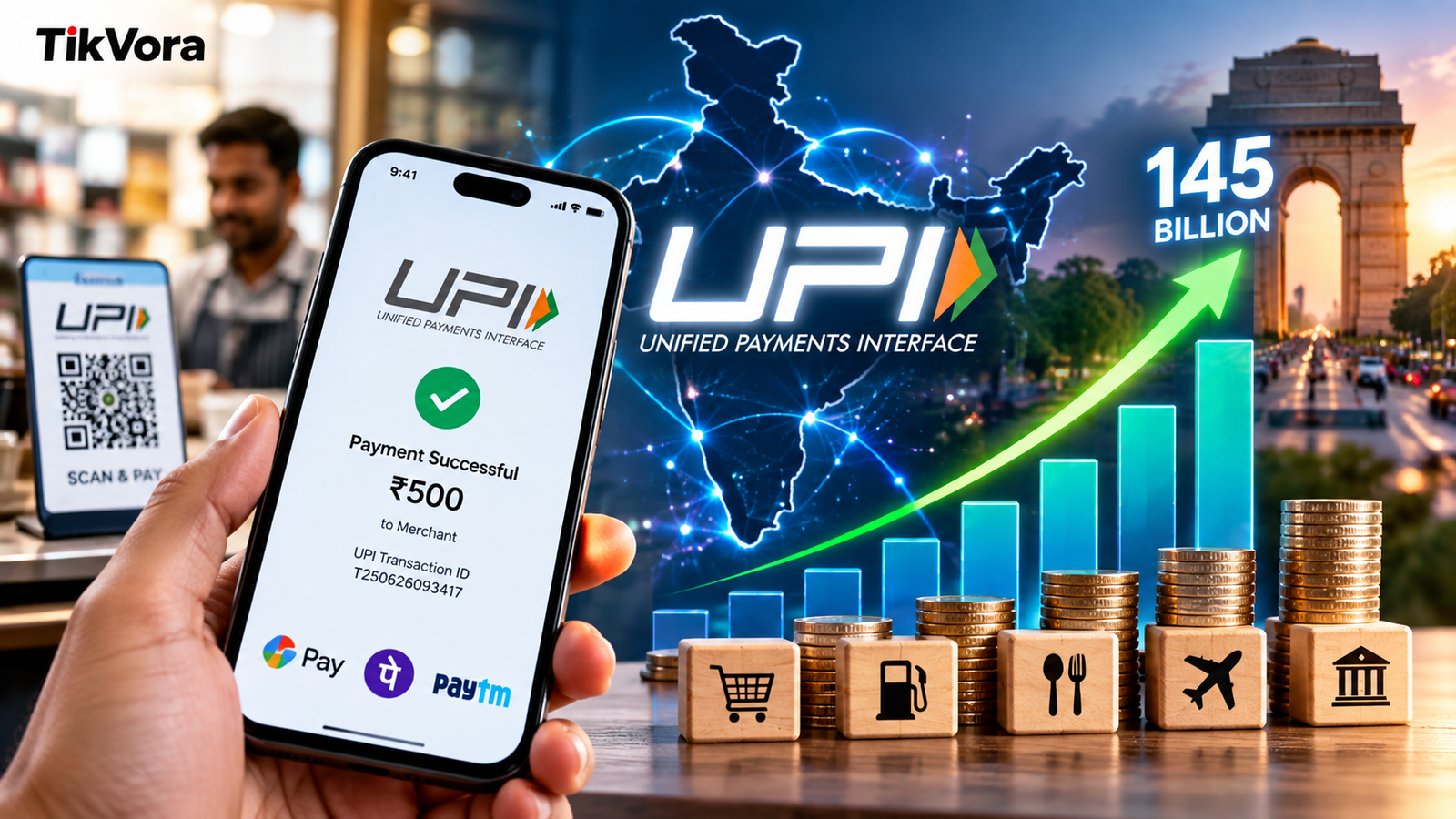
With over 15 billion UPI transactions recorded monthly and the platform processing trillions of rupees annually, any change to its fee structure has far-reaching economic implications for merchants, consumers, banks, and the broader digital economy.
As the Supreme Court prepares to hear this landmark case, all eyes will be on whether India’s apex court will uphold the government’s push for a sustainable payment ecosystem or side with petitioners arguing for continued zero-cost access to one of the world’s most successful digital payment platforms.
UPI MDR ₹2000: The Supreme Court of India is hearing a crucial PIL challenging the government’s new 0.4% MDR fee on UPI transactions above ₹2,000, set to implement from October 15, 2026. Filed by advocate Anjan Datta, the petition argues lack of transparency, questionable legal basis under amended Section 10A, and warns that merchants will pass costs to consumers, ending six years of free UPI payments. The framework exempts transactions under ₹2,000, P2P transfers, and small merchants receiving up to ₹1 lakh monthly, while essential sectors pay flat ₹5. Despite opposition from trader associations and political parties, the government rules out rollback, citing ecosystem sustainability and infrastructure costs.
The Supreme Court’s September 28 hearing could grant interim stay, issue notices to Finance Ministry and NPCI, or dismiss the petition. This landmark case will shape India’s digital payment future, affecting 15 billion monthly UPI transactions and determining balance between financial inclusion and commercial viability. Outcome impacts consumer trust, merchant adoption, and India’s global fintech leadership position. Stay informed as apex court decides whether zero-cost UPI continues or reasonable charges begin for larger commercial transactions.
TIKVORA — Your trusted source for AI News, AI Tools, Technology, Startups, Innovation, Machine Learning, Generative AI, and Digital Trends. Fast, clear, and reliable updates on the technologies shaping the future.
Grow your business online with SEO, Performance Marketing, Social Media Marketing, Website Development, Content Marketing, and Graphic Design & Branding services. Visit the DIGI SIKHO Digital Marketing Agency website to explore all our Digital Marketing Services.
- Warning: 2026 Google September Spam Update Continues – 3 Badi Wajah & Outlook

- RBI MPC October 2026 5 7: Repo Rate in Focus as Inflation Risks Return
- 5 Best & Exclusive Reports: Jio Platforms IPO 21 October की संभावना!
- Amazon Great Indian Festival 2026 Begins on October 8: Major Discounts, Bank Offers and Festive Shopping Deals Announced

- iPhone 18 Pro Max network problems: What Indian Buyers Need to Know

- Incredible Arivihan $10 Million Funding: Kya Hai Wajah & 2026 Outlook